Phuket · When to go
The Best Time to Visit Phuket in 2026 — Skip September, and Ignore the Month-by-Month Monsoon Rankings
Every “best time to visit” page ranks the monsoon months for you. I pulled two official records for the same station — the Thai Meteorological Department's and NOAA's — and they disagree by more than 100mm on June and August. Here's the part that is actually solid, and the two things that should decide your dates instead of a rainfall table.
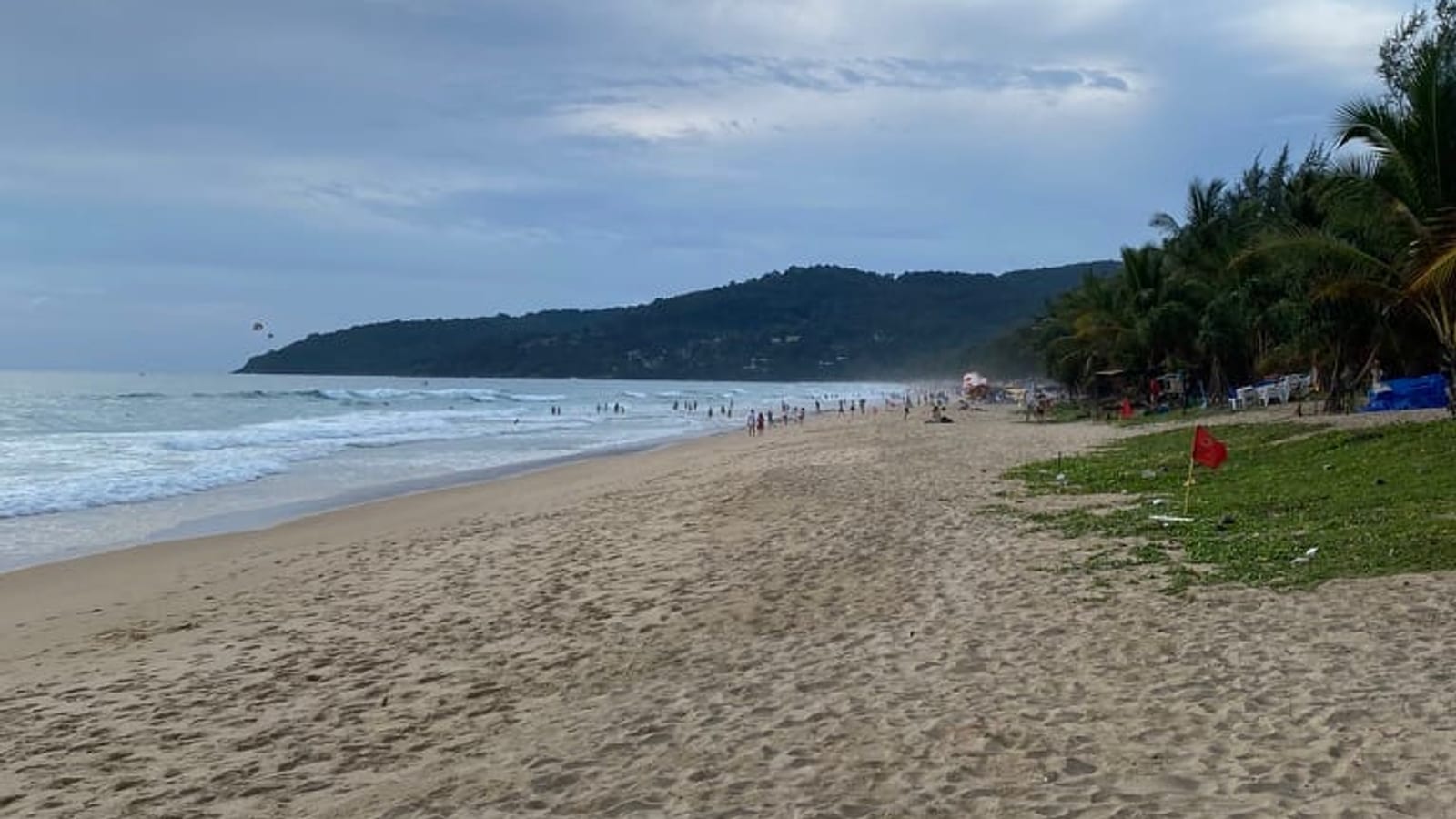
- Solid across every source
- Dec–Mar is dry
- The one month to skip
- September
- Temperature range, all year
- 31–34°C
- Similan & Surin closed
- 16 May – 14 Oct
December to March is dry, September is the wettest month of the year, and almost everything said with confidence between those two facts is less solid than it looks. I pulled two official rainfall records for the same Phuket station — the Thai Meteorological Department's figures published through the WMO, and NOAA's station record for 1991–2020 — and they disagree by 106mm on June and 120mm on August. A third widely-used dataset puts July lowest. All three name a different “driest monsoon month.” So when a guide tells you June is the clever pick, it is ranking noise and presenting it as insight. And living here, June and August feel the same to me — when the records can't agree and the resident can't tell them apart either, that difference isn't there to be found. What survives every source: the dry season really is dry, September really is the worst month, and April is already wet despite reading as dry season. Past that, the things that should actually pick your dates are what's closed — Similan and Surin shut from 16 May to 14 October — and whether the sea is swimmable, not a rainfall league table.
Every "best time to visit Phuket" page you've read splits the year in two — dry season, rainy season — and then, having done that, confidently ranks the wet months for you. June is the clever pick, they say. Or July. Or May.
I went to check which, and the checking is the story. I pulled two official rainfall records for the same Phuket weather station: the Thai Meteorological Department's figures as published through the WMO, and the NOAA NCEI monthly record for station 48565, from which I calculated 1991–2020 averages myself. They disagree by 106mm on June and 120mm on August. A third widely-used dataset puts July lowest of the three. All of them name a different driest monsoon month.
So this guide does something the others won't: it tells you which parts of the answer are solid and which are noise being sold as insight.
What changes month to month, and what does not
Start with what does not change, because it deletes a whole category of bad advice. Phuket's mean daily high runs from 31.2°C in September to 33.8°C in March — about two and a half degrees of spread for the entire year. Overnight lows sit between 23.9°C and 25.3°C.
There is no cool season here. Anyone recommending a month because it's "cooler" is guessing, and the direction of their guess is usually backwards: the hottest months are in the dry season, and September, the wettest month of the year, is also the coolest.
What genuinely moves is rainfall, sea state, what's open, and price. Only three of those four can be pinned down.
Why I will not rank the monsoon months for you
The comparison table above is the reason. Two official sources, one weather station, and gaps of over 100mm on individual months — that is not a rounding difference, it is the difference between "driest month of the monsoon" and "third wettest."
There are honest reasons for it. The two records cover different averaging periods, and the NOAA station series is patchy: I could only assemble 196 of a possible 360 station-months for 1991–2020, with some months resting on ten years of observations and others on twenty-five. I'm not claiming NOAA's numbers are the true ones. I'm claiming that once you look at more than one source, the month-level precision everybody offers inside the monsoon evaporates — and that a guide quoting one dataset to two significant figures is showing you confidence it hasn't earned.
What survives the comparison is worth having:
- The dry season is real. December through March is dry in every source, and February is the driest month in all of them.
- September is the worst month in every source. 387mm in the TMD figures, 406mm in the NOAA record. Nothing disputes this.
- April is already wet. Between 120mm and 138mm depending on who you ask — all of them well past "dry season."
Everything else about the monsoon is a coin-toss dressed as a recommendation.
And there's a second check available that the aggregators can't run: ask someone who has lived through those months. I did the obvious thing and applied it to myself. June and August — the two months the records fight hardest over — feel about the same to me. I don't notice a difference between them worth naming. So the records disagree with each other, and the resident can't separate them either. Two independent ways of looking at the question, both returning nothing. At that point the responsible conclusion isn't that the truth sits somewhere in the middle; it's that the month-level difference isn't there to be found, and a guide that ranks those months is selling you precision that doesn't exist.
Which raises the fair question: if the averages can't settle it, what do people here actually do? They don't consult a rainfall table at all — they watch the radar. Windy is the tool I was pointed at by a dive shop and the one I use, because rain here arrives as cells moving across the Andaman rather than as a month-long condition, and you can watch them coming. Once you're on the island, that replaces this entire section. What a monthly average is still good for is the decision you have to make months ahead — which is the one below.
Can you swim? This matters more than the rain
For a beach trip this should drive your dates far more than a rainfall total, and it gets a fraction of the attention.
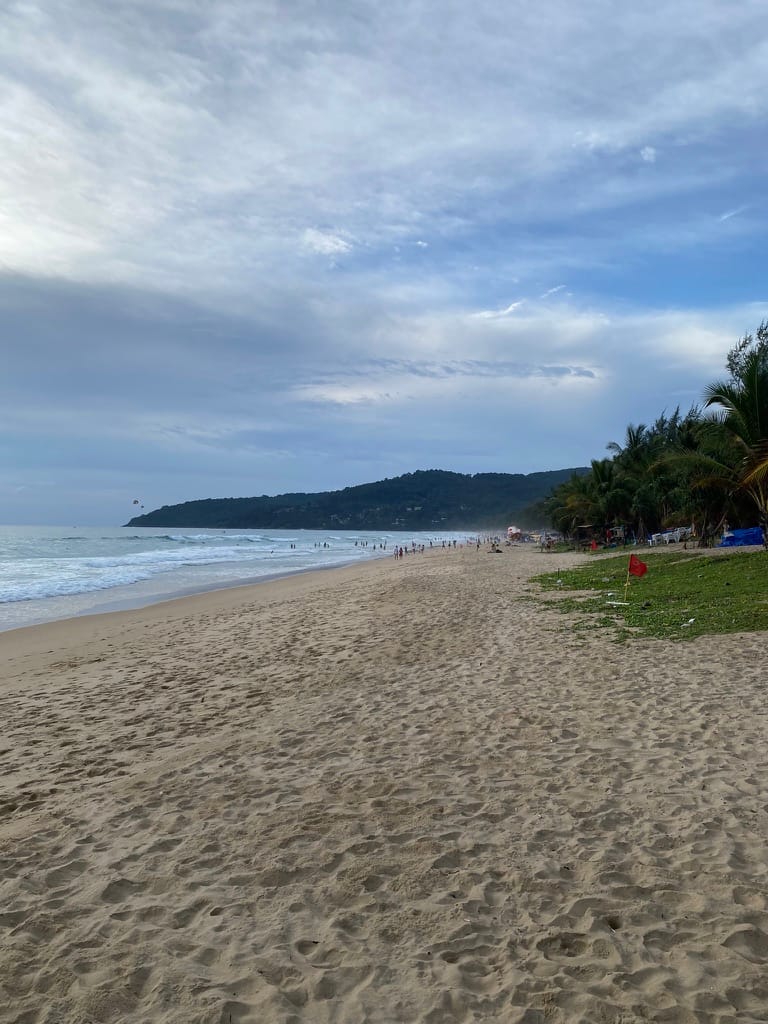
During the southwest monsoon the west-coast beaches — Patong, Kata and Karon among them — develop rip currents that are the reason most drownings on this island happen between May and October. The flag system is not advisory decoration:
- Red flag — swimming is prohibited. Not "take care." Prohibited.
- Yellow flag — swimming permitted, medium risk.
- Green flag — calm conditions.
- Red-and-yellow flag — lifeguards are on duty on that stretch.
The failure mode is consistent: the sea often looks manageable from the sand on a day the flag is red, and people go in anyway.
If that risk is the part of the low season that gives you pause, the cover question is worth its own page rather than a box on this one — it's in the health insurance guide.
The Tourism Authority of Thailand's guidance for the southwest monsoon also notes that monsoon rain typically falls for one to two hours in the afternoon or early evening rather than all day — which is the strongest argument for not writing off the low season, and a much better reason than a disputed rainfall ranking.
If you are coming to dive
For a lot of people this single section settles the whole question, because the dive calendar is set by law rather than by weather.
The Similan and Surin liveaboard season runs roughly mid-October to mid-May, bounded by the park closure below, and the dive high season is November to April. Conditions are reported as most settled from December to February, when the crossings are calmest. Trips thin out at the shoulders — October, early November and after mid-April — which means quieter dive sites for anyone willing to take slightly less certain seas.
If diving is your reason for coming, the closure dates decide your month and the rainfall table is irrelevant.
What is closed when you get there
This is the most expensive scheduling mistake for Phuket, and it has nothing to do with rain.
The Department of National Parks closes Mu Ko Similan and Mu Ko Surin from 16 May to 14 October every year, reopening on 15 October (park opening and closing status; DNP national parks portal). Those islands sit behind a large share of the diving and snorkelling trips sold on this coast. No amount of good weather in June will open the park.
More broadly, boat tours do run through the monsoon but can be cancelled or delayed at short notice when conditions turn, and that call belongs to the captain. Build slack into any monsoon-season itinerary with a boat day in it, and book the boat day early in the trip so there's room to reschedule.
Festivals worth planning around
Two dates shape the calendar beyond the weather. Songkran, 13–15 April, is the Thai new year and is celebrated island-wide — enormous fun if you want it, unavoidable if you don't. The Phuket Vegetarian Festival runs for nine days in the ninth Chinese lunar month, usually placing it in late September or October, and it is the island's most distinctive event by a distance, centred on Phuket Town's shrines. Its dates move every year with the lunar calendar, so confirm them on the Tourism Authority of Thailand's event listing for your travel year rather than trusting a fixed date — including the ones printed confidently on travel blogs, which disagreed with each other by more than a week when I checked in August 2026.
Closure dates, festival dates and flag rules are set by Thai government agencies and change: everything above was checked in August 2026, and you should verify against the official pages linked here before booking around any of it.
If you are moving here rather than visiting
The arrival month matters differently if you're staying. Rental supply and rates move with the season — pressure is on through the high season and eases in the monsoon — and arriving in the low season buys you time to look at places properly instead of taking the first thing available. If that's your situation, the month is a smaller decision than where you base yourself, and that's where your research time should go.
Next step: if you've settled on a month, the choice that will shape your trip more than the dates is which coast and which beach you book — Patong and Karon are very different propositions in the same week of weather. That's the where to stay in Phuket guide. If you're weighing a longer stay instead, start with the real cost of living here, then which area to actually live in. The monsoon months are the ones you spend indoors, which is when what it costs to stay online stops being a footnote.
01The shape of the year
Phuket rainfall by month
amber = the dry monthsMonthly rainfall from the Thai Meteorological Department, published via the WMO. Read the shape, not the individual bars: the dry season and the September peak are real and appear in every source. The monsoon months are where the records stop agreeing — see the next section for how far apart they are.
02Two official records, same station, different answers
Both columns are official. The left is the Thai Meteorological Department's figure published through the WMO; the right is what I calculated from the NOAA NCEI monthly record for the same station (48565) across 1991–2020. If the monsoon could be ranked month by month, these would broadly agree. They do not.
| Month | TMD / WMO | NOAA 1991–2020 | Gap |
|---|---|---|---|
| May | 270mm | 278mm | 8mm — agrees |
| June | 237mm | 343mm | 106mm apart. One calls it the driest monsoon month, the other the third wettest. |
| July | 284mm | 285mm | 1mm — agrees |
| August | 283mm | 403mm | 120mm apart — the widest disagreement of the year. |
| September | 387mm | 406mm | 19mm — both put September at the top |
| October | 296mm | 365mm | 69mm apart |
The NOAA record covers 196 of 360 possible station-months (54%), with 10–25 years behind each month — thin enough that it is evidence of uncertainty, not a better answer. The two also cover different averaging periods. That is the point: neither is precise enough to rank June against July.
03Month by month — what is actually decidable
Rainfall here is the TMD figure, kept for consistency with the chart. Where the records disagree I say so rather than pretending to a precision none of them have. The right-hand column is what should actually move your decision.
| Month | Rain | Confidence | What should decide it |
|---|---|---|---|
| Januarypeak season | 23mm | solid | Dry and calm across every source. Also the most expensive and most crowded stretch of the year — the peak runs roughly late December into January. |
| Februarypeak season | 26mm | solid | The driest month in every record I checked. If dry weather is the only variable you care about, this is the answer and there's no ambiguity in it. |
| Marchshoulder | 59mm | solid | Still dry, past the peak crush, and still full dive season. The hottest month of the year at 33.8°C mean high. The best all-round balance if you can take heat. |
| Aprilthe trap | 138mm | solid | Reads as dry season, isn't. Joint-hottest month and already carrying real rain — every source I checked puts April between 120mm and 138mm. Songkran (13–15 April) adds crowds. |
| Maymonsoon opens | 270mm | solid | The southwest monsoon arrives and Similan and Surin close on 16 May — the hard edge of the dive season. Rates fall from here. |
| Junecontested | 237mm | disputed | Do not trust anyone who tells you June is the clever monsoon pick. The two official records are 106mm apart on this month. Low-season pricing is real; the weather edge is not established. |
| Julycontested | 284mm | disputed | Both official records agree on July's total, but a third dataset puts it lowest of the monsoon. A common European-holiday month, so rates firm up mid-monsoon. |
| Augustcontested | 283mm | disputed | The widest disagreement of the year — 120mm between two official records. Treat any confident August ranking as invented. |
| Septemberavoid | 387mm | solid | The wettest month in every source, with the roughest sea and the parks still shut. This is the one month where the blunt advice is right — and the one the “avoid May–October” framing fails to single out. |
| Octoberturning | 296mm | solid | Still wet, but the parks reopen on 15 October and liveaboards restart mid-month. The Vegetarian Festival usually falls here. |
| Novemberunderrated | 174mm | solid | The monsoon tail before the peak lands. Wetter than most guides imply, but the dive season is open again and December's crowds haven't arrived. |
| Decemberpeak lands | 62mm | solid | Dries out fast. Early December is the sweet spot before the late-December peak sends rates and crowds to their annual high. |
Rainfall: Thai Meteorological Department via WMO. Season, closure and dive-season dates checked August 2026.
04The honest verdict
February and March if you want certainty; November or early December if you want the same dry weather with fewer people. February is the driest month in every record with no ambiguity at all, and March holds the dry weather while the peak-season crowds thin — it is the best all-round month on the evidence, provided you can take the year's highest heat. November through early December is the quieter version of the same bet: the rain is falling away, the national parks and the dive season are open again, and the late-December price spike hasn't landed.
September — and treat any confident ranking of the other monsoon months as marketing. September is the wettest month in every source I checked, with the roughest sea of the year and the Similan and Surin parks closed until 14 October. It is the only month the data lets me tell you to avoid outright. April is the quieter mistake: it sits on the dry side of a two-season chart while already averaging 120–138mm, at the year's joint-highest temperature, with Songkran crowds on top. And if a page tells you June or July is the smart monsoon month, check whether it cites anything — two official records for this station disagree by over 100mm on exactly that question.
Frequently asked questions
- What is the best month to visit Phuket?
- February for certainty — it is the driest month in every record I checked, with no disagreement between sources. March is the best all-round choice: still dry, still full dive season, past the peak-season crowds, though it is the hottest month of the year at a 33.8°C mean high. November and early December give you similar conditions with fewer people and lower prices than the late-December peak.
- What month should I avoid in Phuket?
- September. It is the wettest month in every source — the Thai Meteorological Department's figure is 387mm and the NOAA station record for 1991–2020 works out at 406mm — with the roughest sea of the year and the Similan and Surin national parks still closed until 14 October. April is the second one to watch: it looks like dry season on a two-season chart but already averages 120–138mm and is the joint-hottest month.
- Is June the best month to visit Phuket in the rainy season?
- There is no good evidence for that, despite how often you'll read it. Two official records for the same Phuket weather station disagree by 106mm on June: the Thai Meteorological Department's figure is 237mm, while the NOAA NCEI station record for 1991–2020 comes out at 343mm. A third widely-used 1991–2020 dataset puts July lowest instead. All three name a different driest monsoon month, which means none of them can support a confident ranking. Low-season pricing in June is real; a weather advantage over July or August is not established.
- Is it worth visiting Phuket during the rainy season?
- Often yes, but pick your dates on closures and sea conditions rather than on a rainfall league table. The Tourism Authority of Thailand notes that monsoon rain typically falls for one to two hours in the afternoon or early evening rather than all day. The decisive constraints are that Similan and Surin close from 16 May to 14 October, that boat trips can be cancelled at short notice, and that red flags are common on the west-coast beaches.
- Can you swim in Phuket during the monsoon?
- Sometimes, and you must obey the flags. On Phuket's west-coast beaches a red flag means swimming is prohibited, not merely risky; yellow means medium risk; a red-and-yellow flag means lifeguards are on duty. Rip currents during the southwest monsoon are why most drownings here happen between May and October. Never enter the water on a red flag, however calm the sea looks from the sand.
- When are the Similan and Surin islands open, and when is the diving season?
- The Department of National Parks closes Mu Ko Similan and Mu Ko Surin from 16 May to 14 October each year, reopening on 15 October. Liveaboards run roughly from mid-October to mid-May around that window, and the dive high season is November to April. If a Similan trip is the reason for your journey, your dates have to sit outside the closure — this is the most common way people book the wrong month for Phuket.
- When is the Phuket Vegetarian Festival?
- It runs for nine days during the ninth Chinese lunar month, which usually places it in late September or October, centred on Phuket Town's shrines. The dates shift every year with the lunar calendar, so confirm them on the Tourism Authority of Thailand's event listing for the year you're travelling rather than relying on a fixed date.