Phuket · Living solo
A Light Died in My Phuket Condo: It Wasn't a Bulb — and Fixing Both Cost ฿268
The building office doesn't come inside your unit, and my lease puts anything under ฿2,000 on me. So I took the dead light down, carried it into the shop, and found out what a Phuket condo repair really costs when nobody else is going to do it.
- Parts, both lights
- ฿268
- What it actually is
- Whole fixture
- My lease threshold
- Under ฿2,000 = me
- The work itself
- ~1 hour, two lights
Two living-room ceiling lights went — one dead, one flickering — and the useful discovery is that a Thai condo ceiling light is not a bulb. It is a sealed one-piece LED fixture wired into the ceiling, so there is nothing to unscrew and nothing to "just replace." The building's juristic office does not service the inside of units, and my lease puts anything under ฿2,000 on the tenant — so this was mine. (That clause, and the rest of what my lease actually says, is in renting a condo in Phuket.) Both replacements cost ฿268 total (buy-1-get-1 at Thai Watsadu, 22 August 2026), plus ฿75 for a non-contact voltage tester I now own. Reported Thursday, working by Saturday lunchtime. The one thing that made it easy: I carried the dead fixture into the shop, because the number that matters is the hole in your ceiling, not the wattage.
Nobody tells you who fixes things.
You read about visas, rent and which beach to live near. Then a ceiling light goes out over your sofa, and you realise you have no idea whether that is your problem, the owner's, or the building's — or, if it turns out to be yours, whether it is a ฿60 errand or a ฿2,000 one.
Mine went out on 20 August 2026. Two of them: one dead, one flickering the way they do a few days before they quit. By Saturday lunchtime both were working and the parts had cost ฿268 — for both.
Living here on your own, this is the whole shape of the thing: there is no one else in the flat who might deal with it, and no one to ask whether it's normal. Every small failure is yours to identify, price and either fix or hand off. Whether that reads as a burden or as independence is your business. The same clause governs every other bill and repair that lands on a tenant here. Either way, the useful skill isn't wiring. It's knowing what your lease says, and who to message first.
Here is the whole thing, because the answer turned out to be more useful than the repair: what the agency said, what my lease actually puts on me, why "just change the bulb" is not a thing in a Thai condo, and the one move that made buying the right part impossible to get wrong.
Why it is not a bulb
In a Japanese or European flat, a dead ceiling light usually means a bulb — unscrew, replace, done. That was the plan I had in my head, and it was wrong.
The unit that came out of my ceiling is a MEGAMAN one-piece LED fixture: 9 W · 3000 K · 650 lm · 170–240 V, the LED and its driver moulded into a single sealed body. It is held in the hole by two sprung clips, and two wires — brown and blue — run out of it straight into the ceiling feed. No socket. No glass. Nothing to unscrew and take to the shop.
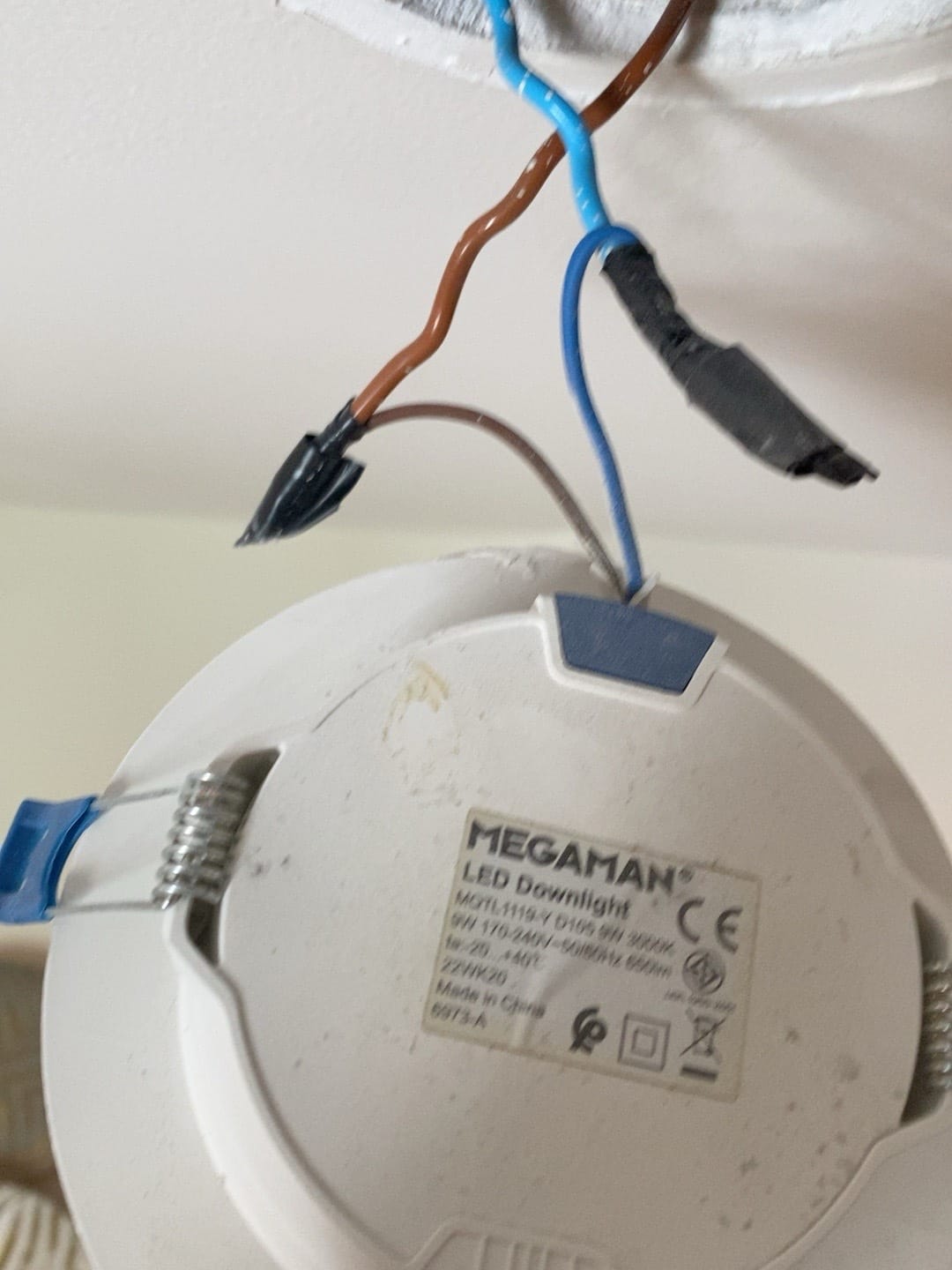
This is not a quirk of my building: the lighting aisle at Thai Watsadu is full of exactly this format, boxed as complete units. If there is a screw-in-bulb version of the same recessed light, I did not find it on the shelf.
Three things follow from that, and they are the whole job:
- You are buying a fixture, not a bulb — so it has to fit the hole that is already in your ceiling.
- The number that matters is the cutout, not the wattage. Mine was printed on the back of the old unit: D105. Wattage decides how the room looks; the cutout decides whether the thing goes in.
- Whatever you buy arrives with bare wires. That is a different job from changing a bulb, and it is why the power section below is not optional reading.
Who actually pays for it
I sent the agency that manages my unit a message on Thursday morning with a ten-second video of the two lights. The answer came back Saturday morning, and it had three parts.
The juristic office does not service the inside of units. The building office looks after the common areas; anything inside your own door is between you and the owner. Useful to know before you go and knock on it.
My lease puts it on me. The clause the agency quoted: replacement of light bulbs — "items under THB 2,000" — is the tenant's responsibility. I do not know how standard that particular figure is across Phuket leases, so do not borrow my number: go and find yours, because that threshold is the thing that decides this argument before it starts.
They offered to source a technician — with the price quoted to me first, before anything was arranged. That is the right way round, and worth insisting on whoever you rent from.
Where the line usually sits. My lease draws it with a number, which is unusually clean. The broader pattern in Thai rentals — researched, August 2026, and your own contract overrides every word of it — is that the owner carries the structural and system-level things that keep a place liveable, while the tenant carries consumables and anything they broke themselves. A dead ceiling light sits firmly on the consumable side. A failed air-conditioner compressor, a leaking pipe or a dead water heater does not, and you should not quietly pay for one of those because a ฿268 light went on your side of the ledger. If something big fails and nobody will act, that is the moment to read your contract properly rather than a blog — including what can be deducted from your deposit, which is the same argument in a different month.
Then the part that actually pays for the message. Once I said I would try it myself first, the owner came back through the agency: she was happy for me to buy and fit them, and would refund the cost against the receipt. Contractually that was hers to decline. So the practical rule for anyone renting here is not "know who pays" — it is:
Report it before you fix it, and keep the receipt. Two minutes of typing turned a ฿268 bill into someone else's offer to cover it, and it means nobody is surprised later by a changed fitting.
Buying the right one
I took the dead fixture off the ceiling first and carried it into the shop. That is the entire trick. Model numbers are meaningless once a unit is a few years old, but a physical object held against a row of boxes cannot lie to you.
At Thai Watsadu (Phuket Festival branch) the 9 W shelf had several units that fit the same hole:
| Unit | Output | Colour | What decided it |
|---|---|---|---|
| Philips Meson 105 | 9 W · 650 lm | Warm white 3000 K | What I bought — matched the dead one on all three numbers, and was on buy-1-get-1 |
| Luzino | 9 W | Daylight 6000 K | Fits the hole, wrong light for the room |
| Racer | 9 W | Daylight 6500 K | Same problem, one step cooler |
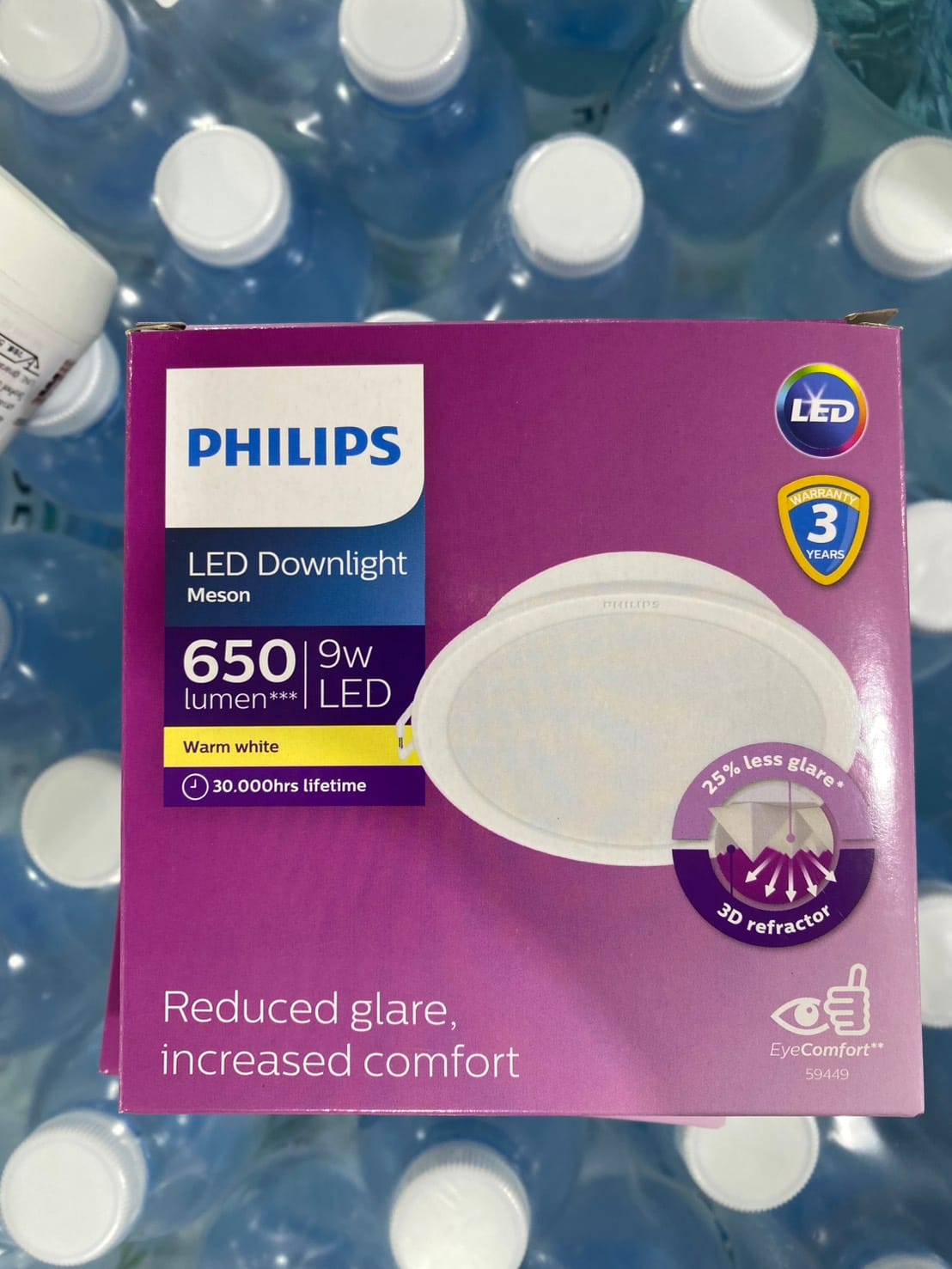
The colour temperature is the trap. Most of the 9 W stock was daylight — 6000 K and 6500 K — and a daylight unit fits the same hole, works perfectly, and then sits in your ceiling glaring blue-white next to four warm neighbours. My dead unit was 3000 K; the Philips is 3000 K warm white, same 650 lm, same 9 W. The room looks like it did before, which is the actual goal.
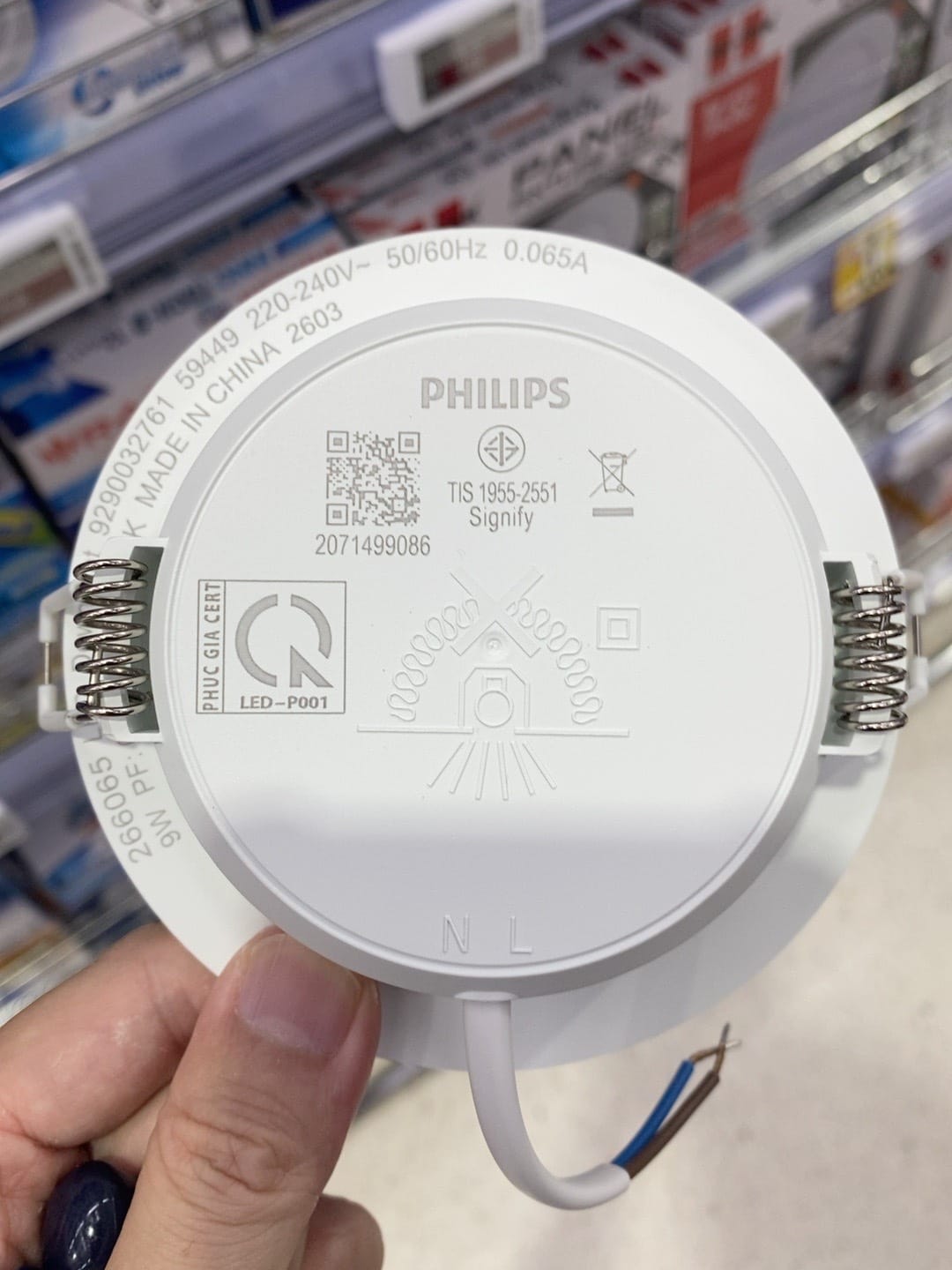
The Philips box also claims a 30,000-hour life and carries a three-year warranty — worth keeping the receipt for a second reason.
Turning the power off properly
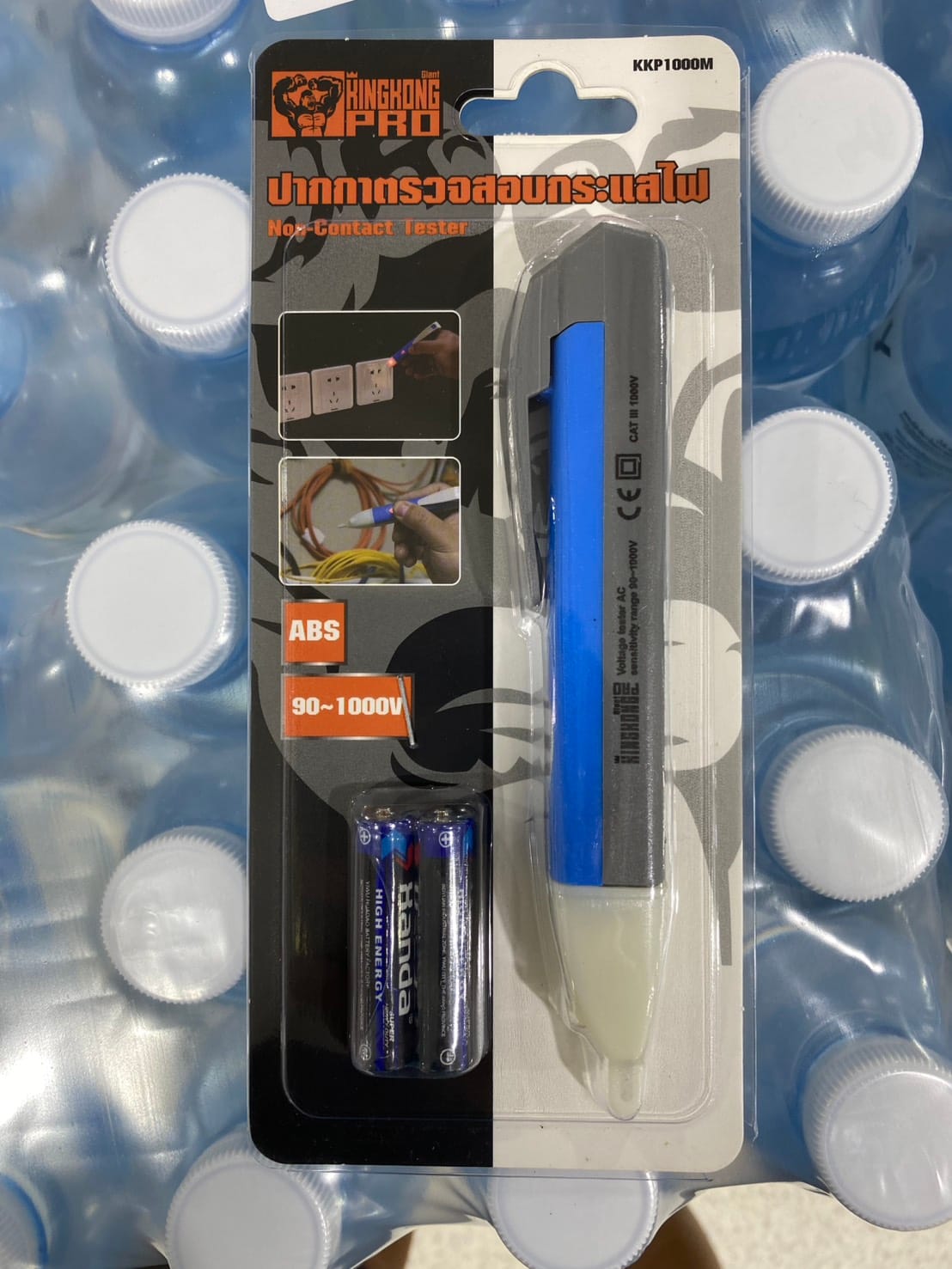
The one part of this I was genuinely uneasy about was the wiring, so I spent ฿75 on removing the guesswork: a Giant Kingkong Pro KKP1000M non-contact voltage tester, bought on the same trip. When I asked staff for one I was first shown a multimeter — the thing you actually want for this is the pen-shaped non-contact tester, and it is the cheapest item in this entire article.
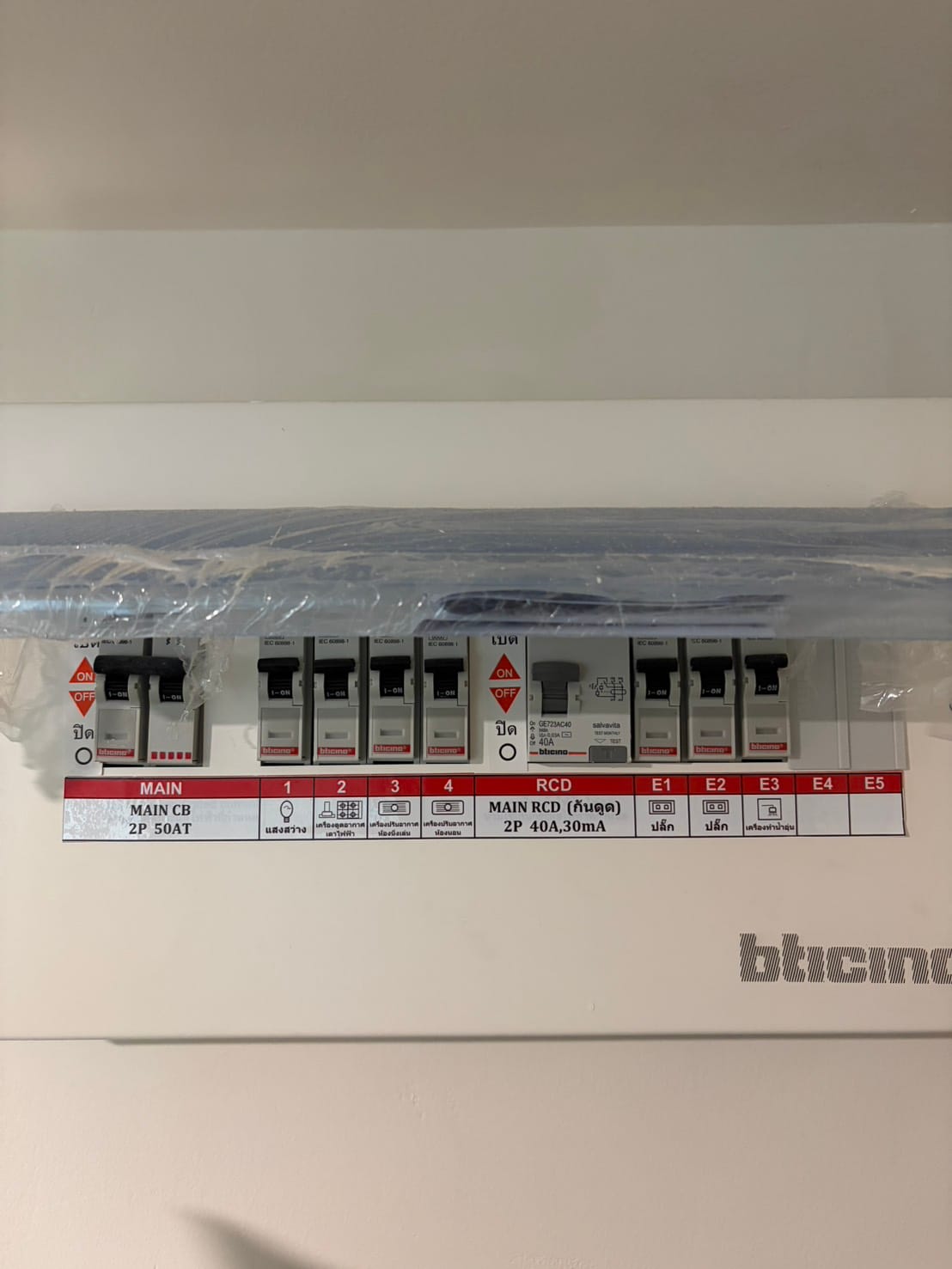
At home, the board is labelled — in Thai, with pictograms, which turns out to be the useful part. Breaker 1 is แสงสว่าง — lighting — and it carries a little lightbulb icon. If you read no Thai at all, that icon is enough: the rest of the strip follows the same logic (2 is the extractor and hob, 3 and 4 are the living-room and bedroom air-conditioners, and past the 2P 40 A / 30 mA main RCD sit the socket circuits and the water heater). Photograph your own board once and you will never hunt for it again.
With the power on, the tester lit up on the brown conductor; with breaker 1 off, it went quiet. That check — live, then not live, on the actual wire I was about to touch — is what made the rest of it a calm job instead of a nervous one.
Then the honest part, which matters more than the tidy version would:
The existing joints in my ceiling were bare twists wrapped in black insulating tape — which is how the unit was built, not something I improvised. I reconnected the new fittings the same way and both have worked since, but I am not writing that up as a method. Twisted-and-taped is what was there; it is not what I would tell you to build. What I would use instead is a lever-type push connector (the Wago 221 style, sold in the electrical aisle of the same building-materials shops) or a screw terminal block — researched, not tested: I have not fitted one here yet, so treat it as the thing I would buy next time rather than a verdict I have earned. The case against tape is simple: a twisted joint's contact resistance creeps up over the years, that one point is where heat appears, and a ceiling void in Phuket is not a cool place for adhesive to stay put. If what is above your ceiling looks different from what I have described, or you are not certain at any point, get an electrician — and if one is coming anyway, replacing taped joints with connectors is a reasonable thing to ask for while they are up there. A non-contact tester is a check, not a guarantee that a circuit is dead, and fixed wiring is where a cheap job turns into an expensive one.
Both units dropped straight into the existing holes — no cutting, no widening, which is what carrying the old fixture to the shop had bought me. Both came on. The pair took about an hour, start to finish: I paid at 11:40 and sent the agency a video of the two working lights, with the receipt, at 12:47.
What the whole thing cost
| Item | ฿ |
|---|---|
| Philips Meson 105 × 2 — buy-1-get-1 (2 × ฿268, less ฿268) | 268 |
| Non-contact voltage tester — a tool I keep, not part of the repair | 75 |
| The repair itself | 268 |

The receipt from that morning actually totals ฿713, and I would rather show you why than round it off: ฿370 of it is a stain remover for the sofa that happened to be in the same basket. It has nothing to do with the lights. The lighting repair is ฿268, and the tester is a tool that will be here for the next one.
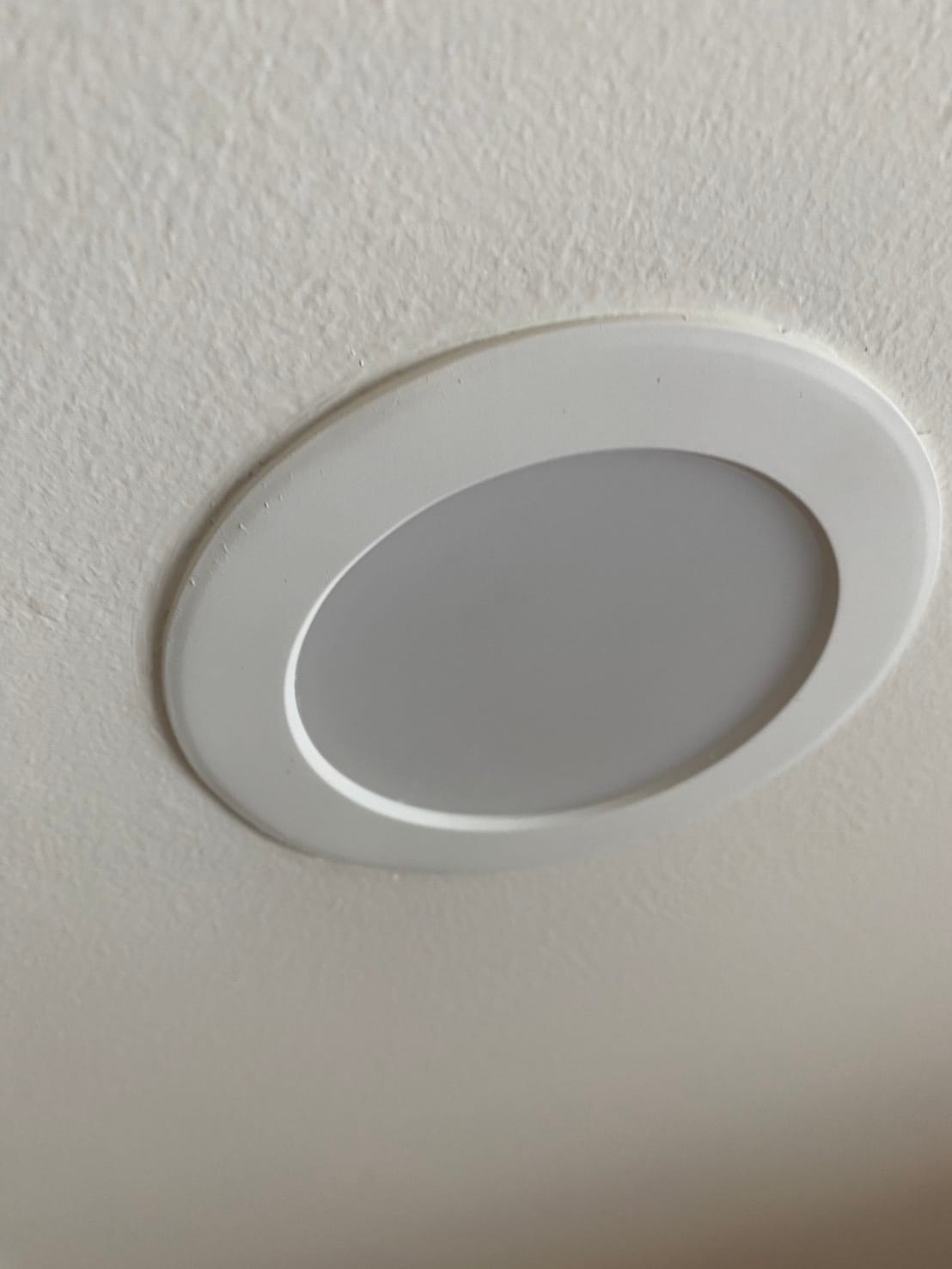
The photo at the top of this page is the finished job: same 105 mm hole, same warm white, no sign that anything was changed. Which is the point — a repair you can see is a repair you did wrong.
Put next to the numbers that actually decide whether this life works — ฿25,000 of rent, roughly ฿50,000 a month all in — a pair of ceiling lights is a rounding error. That is rather the point: the thing that catches people out about renting here is not the cost of the repair, it is not knowing whose job it is. Now you know where to look: the threshold clause in your own lease, and the fact that the building office stops at your front door.
If you are still working out what a month here costs, the real cost of living in Phuket is where that ฿50,000 comes from and what it buys. If you have not signed anything yet, where you base yourself will move your monthly number far more than any repair ever will.
01Do it yourself, or get someone in?
If you can find and switch off the right breaker, confirm the circuit is dead, and the old fixture comes out looking like a simple two-wire job — this is a ฿268 fix that took me about an hour for the pair. Carrying the old unit to the shop removes the only real risk (buying something that does not fit). Tell your agent or owner before you do it: mine turned into an offer to refund the parts against the receipt, and a message costs you nothing. Keep the receipt either way.
If the breaker panel is unlabelled, the tester still reads live, the fitting is anything more than two wires, or you simply are not sure — stop and ask for a technician. Your agent can source one; insist the price is quoted to you before the visit, which is how mine offered it. A ฿75 non-contact tester is a useful check but not a guarantee of a dead circuit, and fixed wiring is where a cheap job becomes an expensive one. Nothing about ฿268 is worth a shock or a fire.